Final project
Tentative Plans
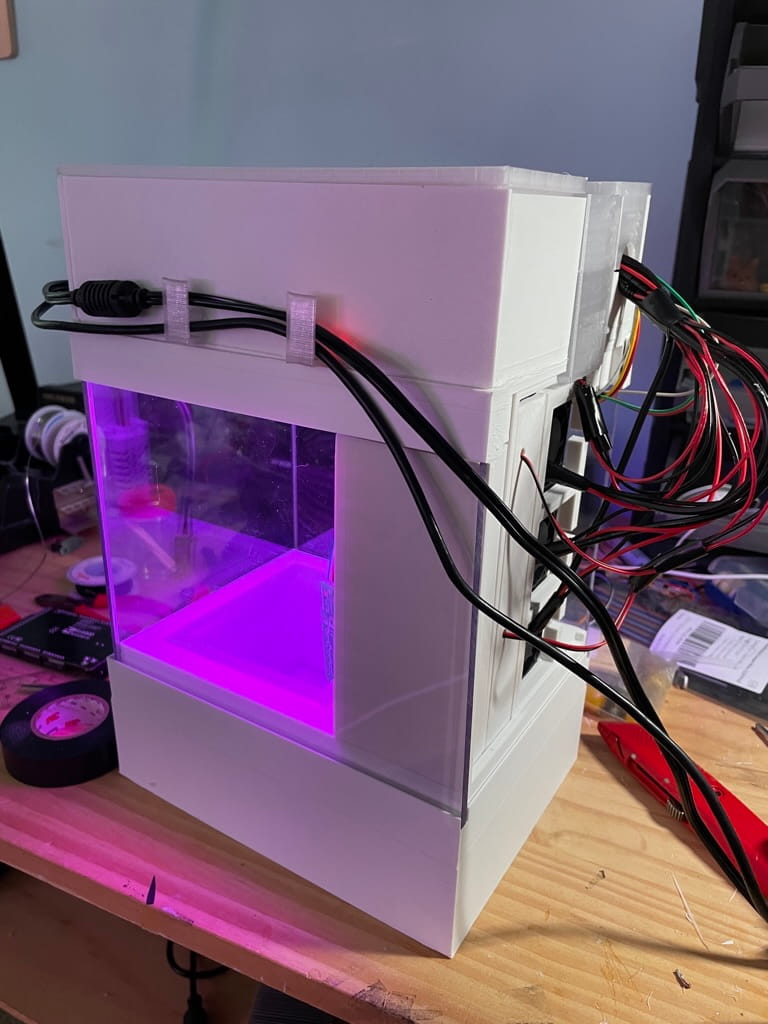
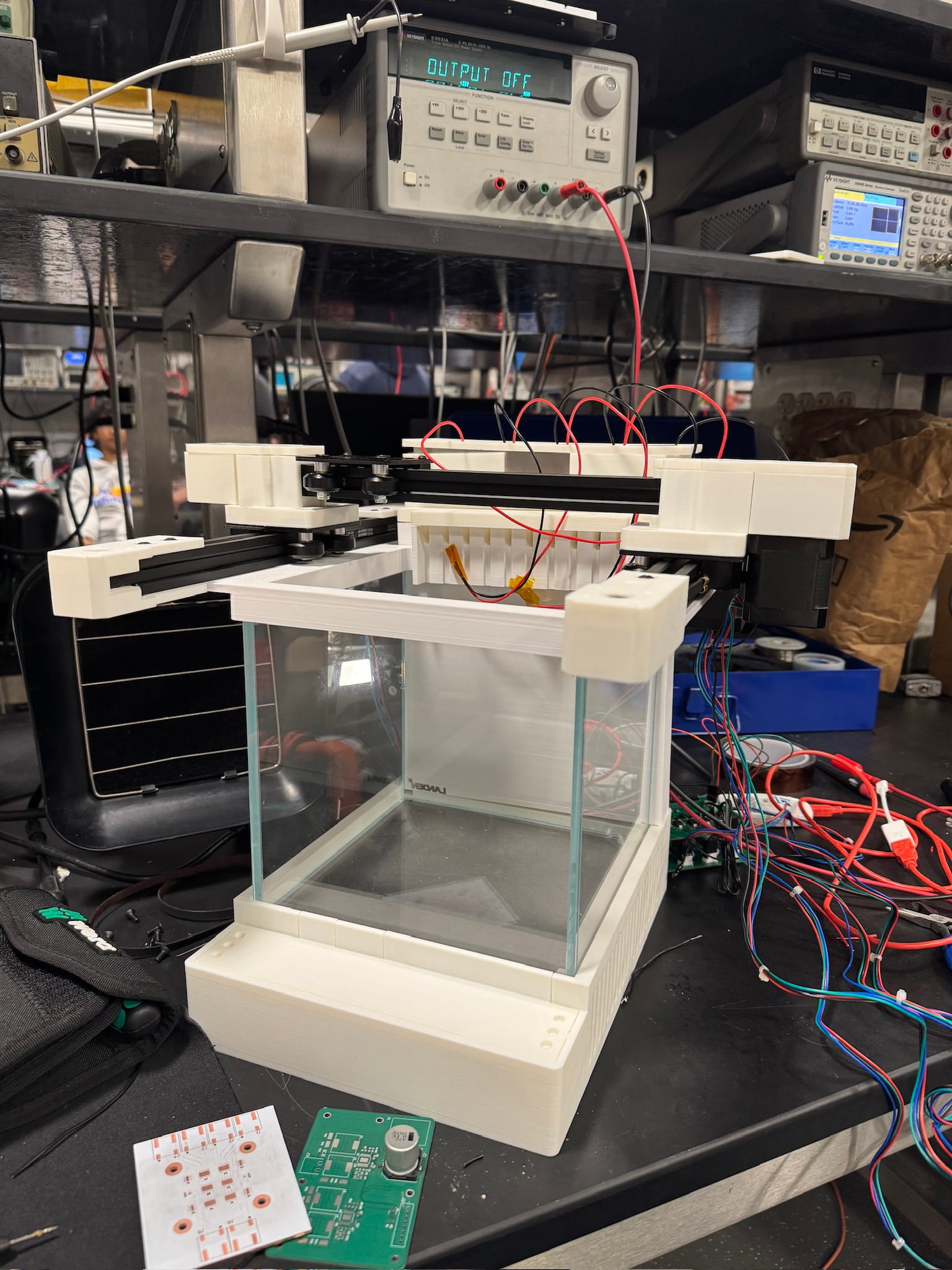
I’m tentatively leaning towards a grow chamber. In specific, I would like a small enclosure capable of controlling temperature, flow, and lighting for both aquatic and terrestrial environments. In the past, I’ve attempted to do so but have yet to be more than moderately successful. Now with a little more hands-on experience growing reef organisms and plants, I feel like I’m ready to make another attempt.
Left: a prototype I built in high school. Right: a prototype I built in undergrad for reef systems.
Week 1
With all of my learnings, I went back to the drawing board. I decided to use Inkscape to model my project roughly, and at least include the important parts. To make this work in aquatic and terrestrial setups, I feel like the most important part here is to keep the grow area and the controls as isolated as possible. This also means selecting methods of heating and cooling that have minimal direct contact to the actual environment.
For example, I’ve been a big fan of thermoelectric systems, specifically peltier devices. Of course there’s an issue of horrendous efficiency, and as such a small volume is necessary. The benefits here are:
- Reliability
- Bidirectional temperature control
- Precise temperature control
- A very simple physical interface to work with
Especially for a small environment, I believe that with enough power, we can maintain a wide range of temperatures.
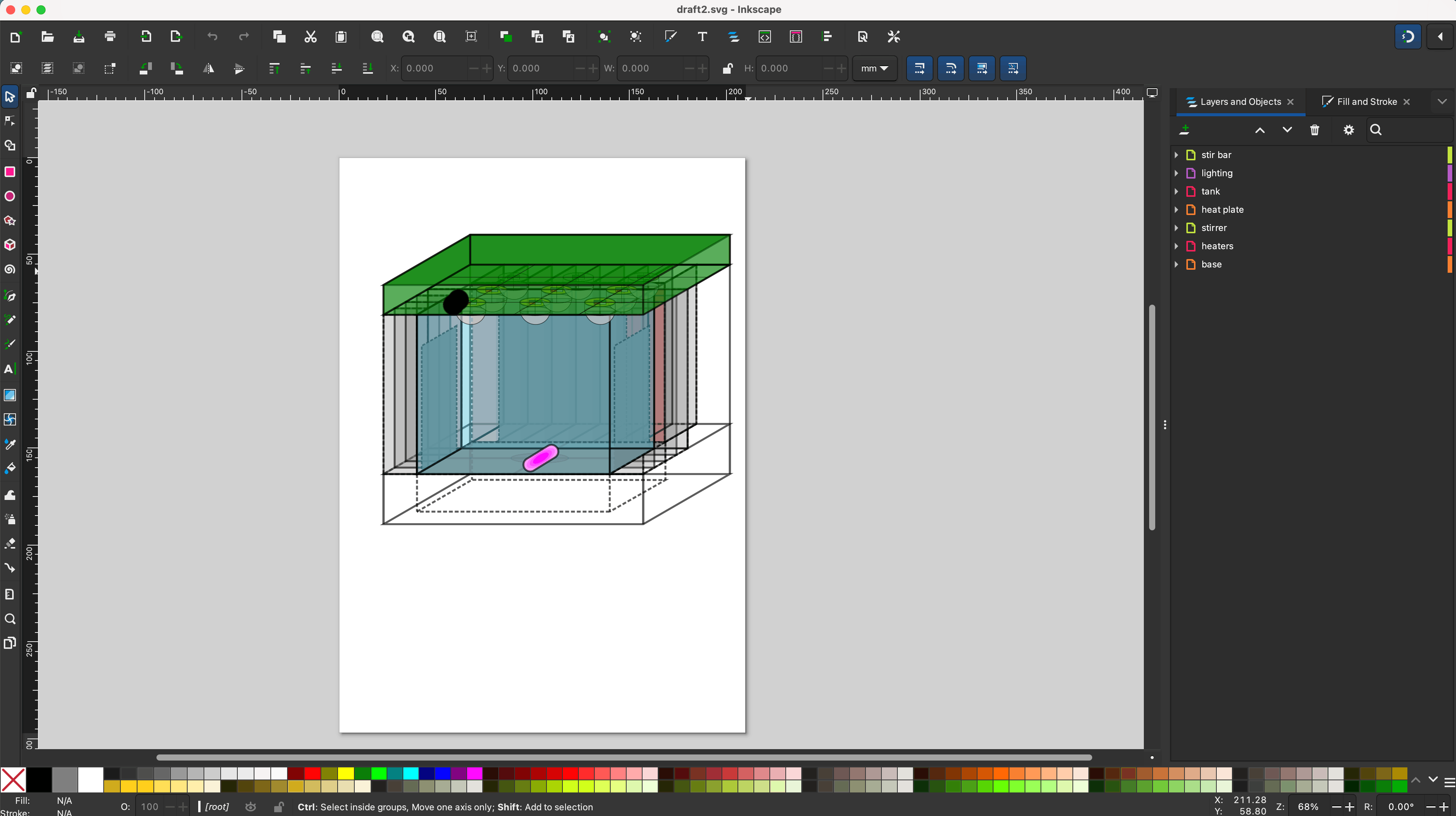
These are pretty rudimentary sketches, but I think they cover the rough parameters I’d like to control.
- Flow: Flow could be controlled by an array of magnetic stirrers.
- Lighting: The lighting could be controlled by swappable LED panels, with different LED configurations for different grow habits.
The dream here would be a semi-universal grow system with programmable parameter curves, for aquatic and terrestrial environments.
Week 4
I got distracted by some side projects, but I decided to approach my grow chamber design again this week. While thinking about different ways to mount the TEC modules to the grow chamber, I realized that I wouldn’t want there to only be a predefined shape or size of enclosure. To transmit heat better, a thin film like a heavy-duty bag might be the best, so there needs to be a way to position and hold the peltier devices in place.
I landed on a swiveling arm idea, with the peltier at the very end, attached to the bag by a magnetic clip (sealed magnets). This way, we can position the heating elements in different orientations for various shapes of interior container.
- Arms: 3 mostly hollow segments on a rod-and-hole swivel, with one segment able to collapse into another in case the enclosure is large.
- Base plate: Holds the arms for 4 different TECs.
- Peltier interface: M3 screws, with the TEC modeled at 40 mm x 40 mm x 4 mm and the heatsink at 40 mm x 40 mm x 20 mm.
- Magnetic clip: Sealed magnets are a must if you’re working with saltwater, since metals leaching into the water is a major reason for tank crashes.
- Printing: PETG, since it’s waterproof and more durable than PLA, at 15% infill with no supports.
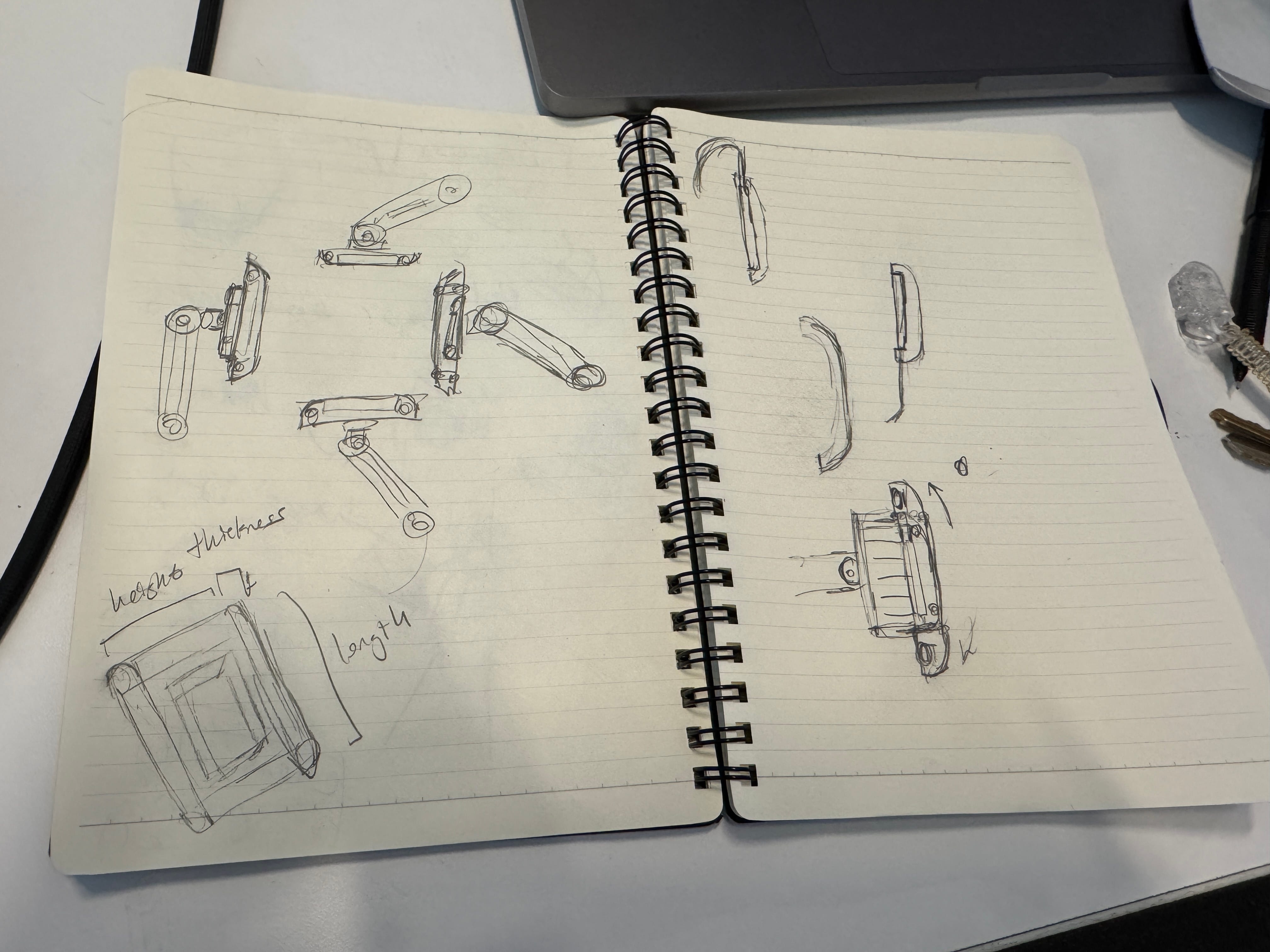
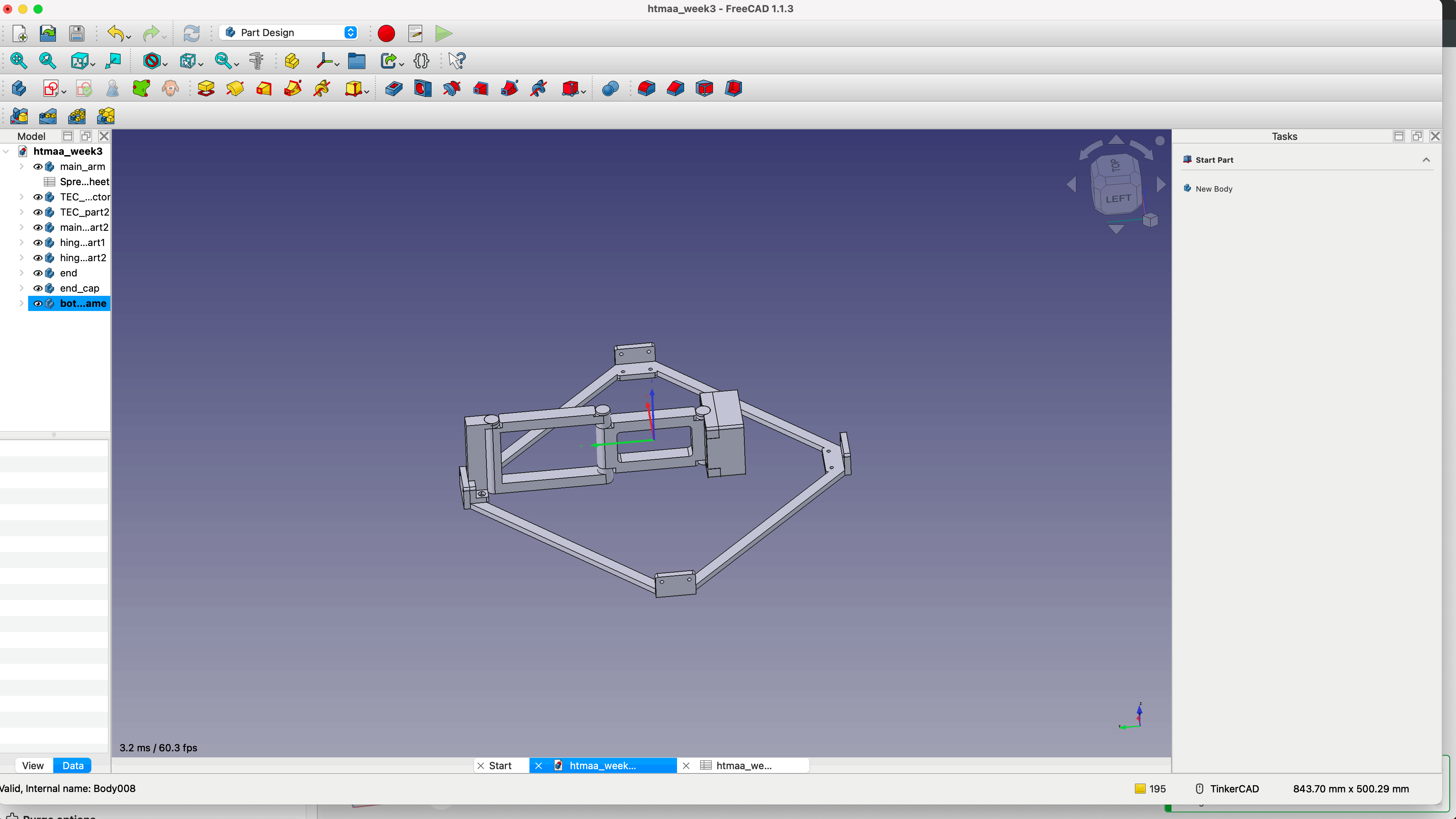
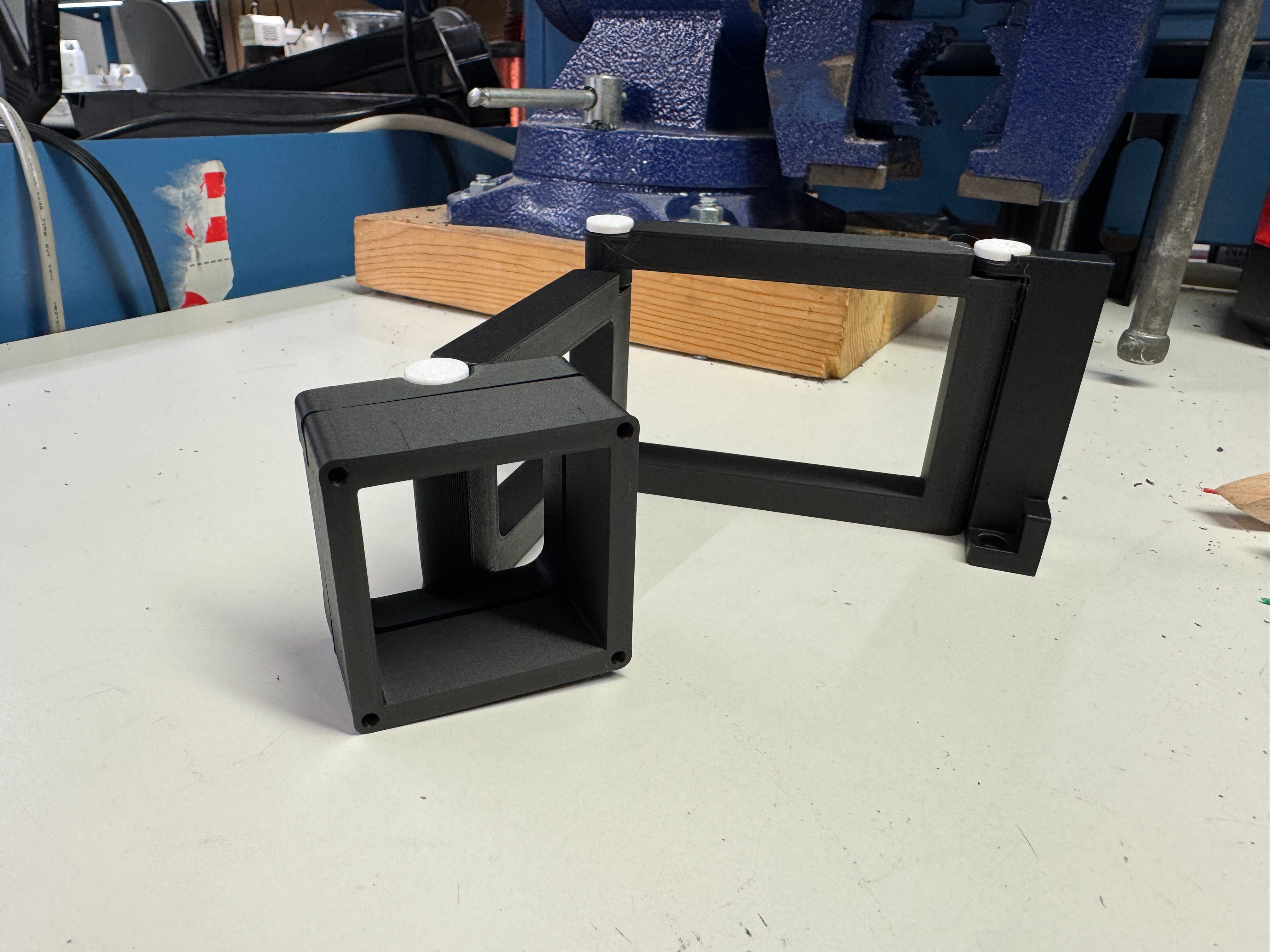
Things to fix next: the parts are not stiff enough, and one of the segments needs another clip so it doesn’t slide around. Full documentation is on the Week 4 page.