Am I a Fish?
-
Summary
Am I a Fish? is a modular construction toy that examines how knowledge is cataloged, dissected and reassembled, and how these operations have been embedded in the design of construction toys. The player assembles a creature from interchangeable parts (heads, gills, bodies, fins, tails and skins), and the toy, sensing which parts it is made of, responds to a single question: am I a fish?
I use the fish as a case study because in toys it almost always appears as a generic idea rather than as a field of variation. By turning the features that classification depends on into parts a child can hold, swap and recombine, the toy makes the act of categorizing itself the object of play.
-
Background: The World, Cataloged for Children
Among the first mass-produced objects made for children were illustrated encyclopedias, conceived as educational aids that set out to enumerate the world plate by plate. Johann Siegmund Stoy’s Bilder-Akademie für die Jugend (Picture Academy for the Young, Nuremberg, 1780–84) and Friedrich Justin Bertuch’s Bilderbuch für Kinder (Weimar: Industrie-Comptoir, 1792–1830; 12 volumes, 1,186 hand-colored plates) are two examples. In both, the world is divided into categories, illustrated and presented to the child.
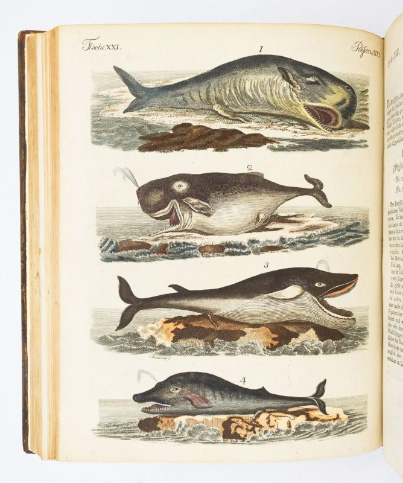
Friedrich Justin Bertuch, Bilderbuch für Kinder, 1792–1830. Over the following century the same impulse took physical form. Friedrich Fröbel’s Gifts (1830s–40s) and, later, Richter’s Anchor Stone Blocks (1880s) translated the world into standardized geometric units that children could assemble for themselves.
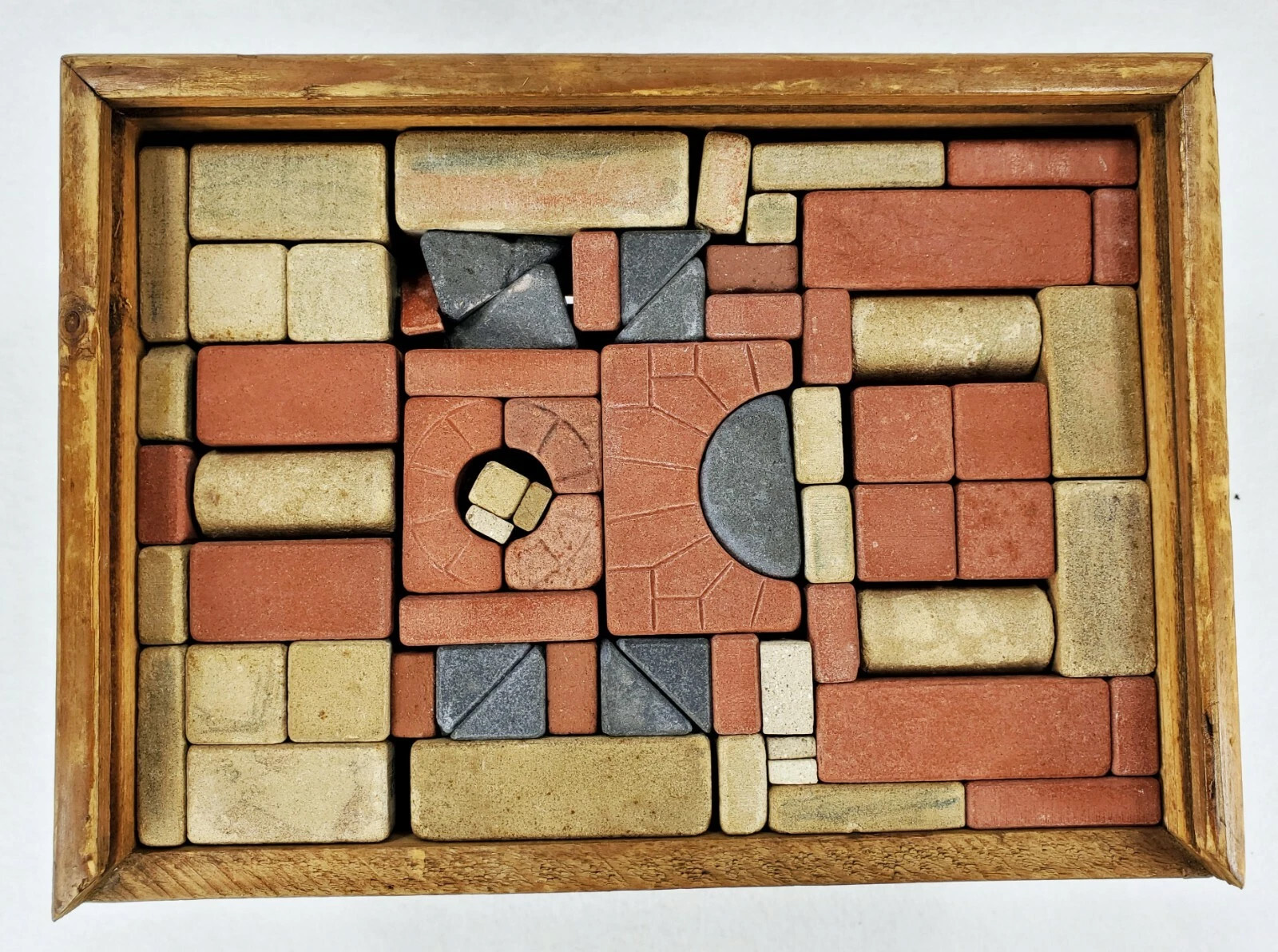
F. Ad. Richter & Cie., Anchor Stone Blocks, 1880s. Am I a Fish? sits between these two traditions.
-
Why Fish
Fish are among the animals most often represented in children’s toys, yet they are almost always represented as a single, general idea: one silhouette, one set of fins, one tail. The child’s interaction with the fish rarely goes beyond recognizing it as such. The enormous variation in how fish are built, and the long history of efforts to classify them, almost never reaches the toy.
This gap is what makes the fish a productive case study. A modular fish exposes the features on which categorization depends (body plan, fin type, gill structure, skin) and allows the player to observe how changing a single part changes what the creature is understood to be.
The fish is also an unstable category. The word is familiar in everyday language, but it does not correspond to a single group in modern biological classification.
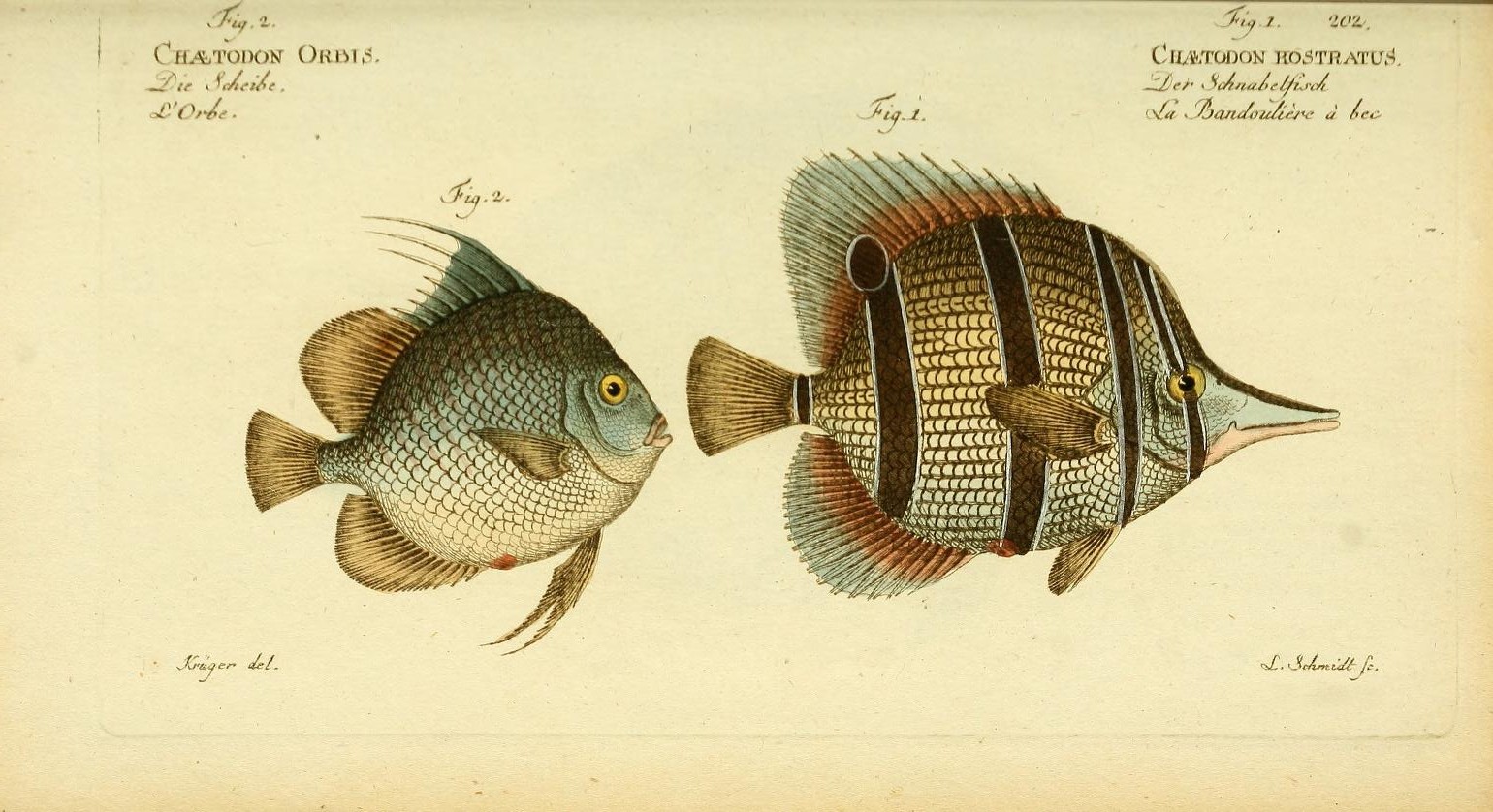
Marcus Elieser Bloch, Allgemeine Naturgeschichte der Fische, 1782–1795. Round Spadefish and Butterfly Fish. -
Concept and Gameplay
The toy consists of several part types, each available in multiple variations, that connect to one another to form a creature: heads, gills, bodies of different lengths, fins, tails and skins.
Play sequence
- The player assembles a creature from the available parts.
- The toy recognizes which parts the creature is made of.
- The toy compares this combination against a set of classification rules.
- The toy answers the question: am I a fish?
-
Process and Making
Each part will carry an identity that the toy can read once the parts are connected, so the joints between parts are at once mechanical and electronic. The sensing approach is still to be developed and will take shape over the course’s electronics and input and output devices weeks. The parts themselves will be fabricated through a combination of 3D printing and the wild card week.
-
Precedents and Research
I look at modular toys less for how their parts fit together than for what each part represents, and for how a set of parts can encode a system of classification.
Fish classification
- Historical fish catalogs and natural-history plates
- Contemporary taxonomic databases and how they organize fish
- Dichotomous identification keys, which already structure identification as a sequence of questions and answers
- Writing on fish as a contested category, e.g. Lulu Miller, Why Fish Don’t Exist (2020)
Modular toys of animals, people, buildings and plants
- Mix-and-match flip books combining heads, bodies and legs
- Fröbel’s Gifts
- Mr. Potato Head and other figures with swappable parts
- Digital creature builders that classify or simulate what the player makes
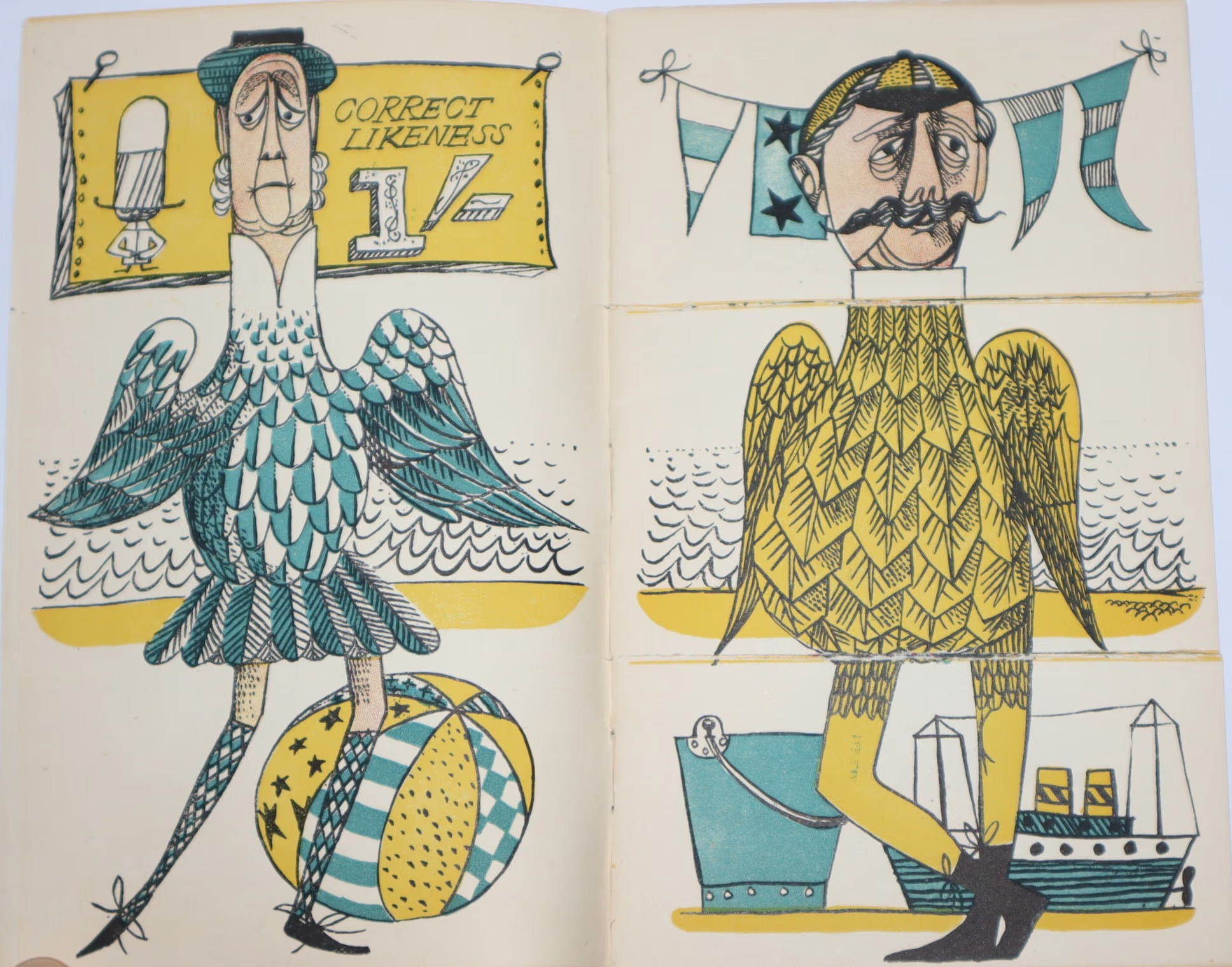
Denis Wirth-Miller and Richard Chopping, Heads Bodies & Legs, 1946. Baby Puffin Book No. 7. -
Open Questions
- How many part types does the toy need?
- How should the toy respond when the answer is “no” or “it depends”?
- Which classification system does the toy follow, and should it make its own rules visible to the player?