September 30, 2026
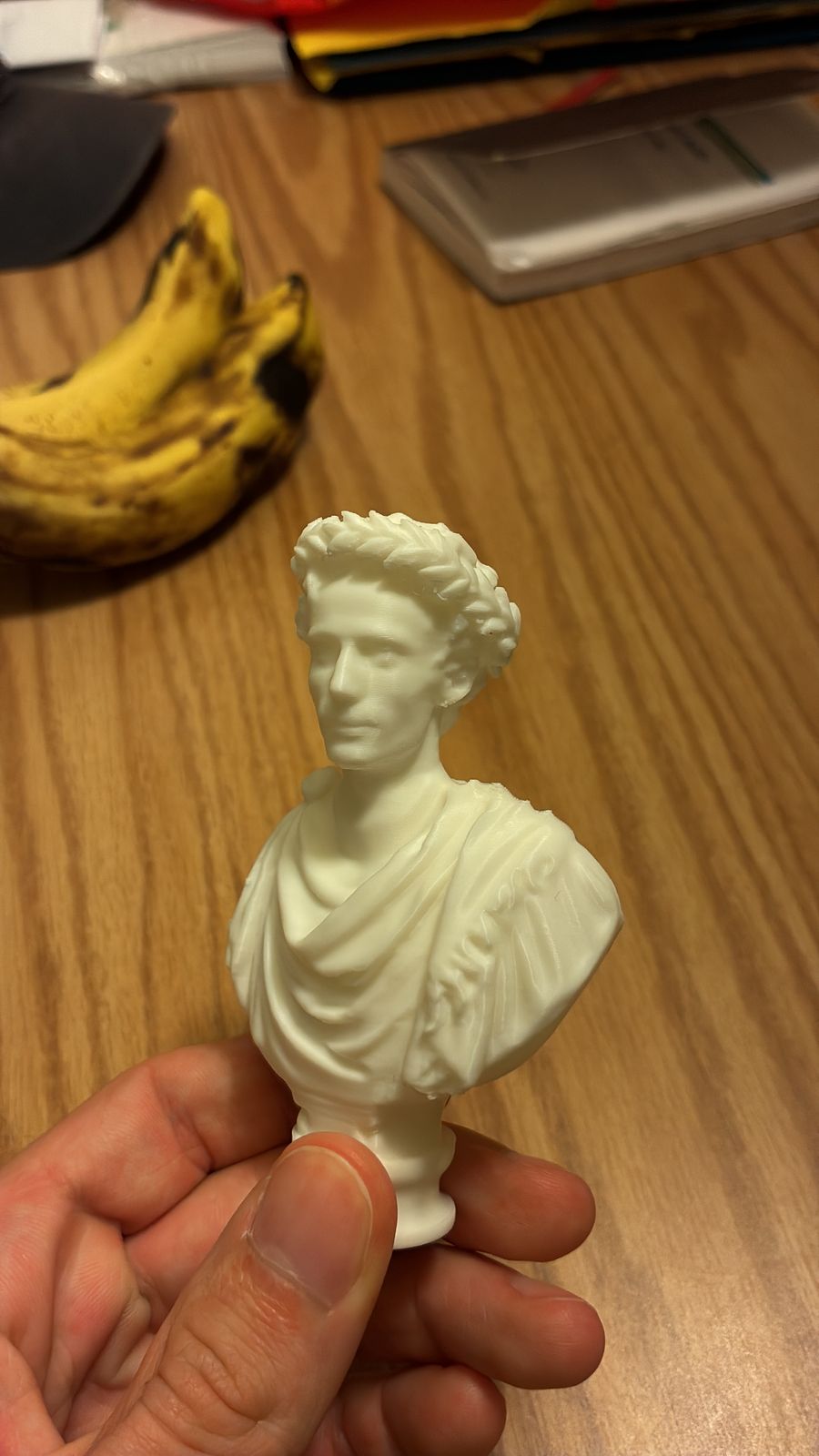
I made a Roman bust of myself, to stand on my desk and hold down paper. I have always wanted my own Roman bust, and I have always been fascinated by famous war leaders, so choosing what to make this week took about four seconds. The head is a 3D scan of mine, printed on top of the body of a bust of Marcus Aurelius.
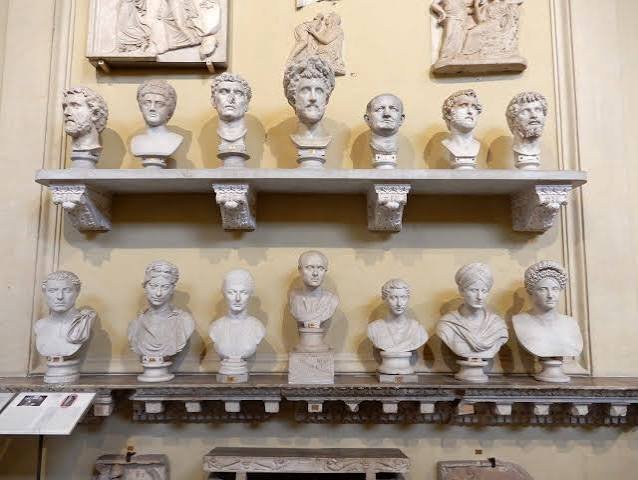
I lived in Rome for a year, and the Vatican Museums are still my favourite museum anywhere. Walking through the corridor of busts there, with a few hundred Roman faces lined up looking at you, is the kind of thing that stays with you. I wanted one of my own.
The emperor I wanted was Marcus Aurelius, the coolest Roman emperor. He ruled from 161 to 180 AD, spent most of that time on campaign on the northern frontier, and is the last of the emperors usually called the Five Good Emperors.
What makes him interesting is not the campaigning, it is that he wrote while he did it. His Meditations were private notes to himself, never meant to be published, and they are one of the clearest surviving statements of Stoicism. Stoicism was founded in Athens by Zeno of Citium around 300 BC, and its central idea is a simple division: some things are up to us, our own judgements and choices, and some things are not, including other people, our reputation and our circumstances. The Stoics argued that everything that actually matters sits in the first category, so a good life comes from your own character rather than from events going your way. It is a strange and rather comforting thing to read notes written by the most powerful man in the world reminding himself to be patient with difficult colleagues.
I scanned my head with the Polycam app on a phone. The first attempt was at home, with my roommate holding the phone, and it is me wrapped in my bedsheets as a toga, which I recommend to anyone who wants to feel ridiculous in their own bedroom.
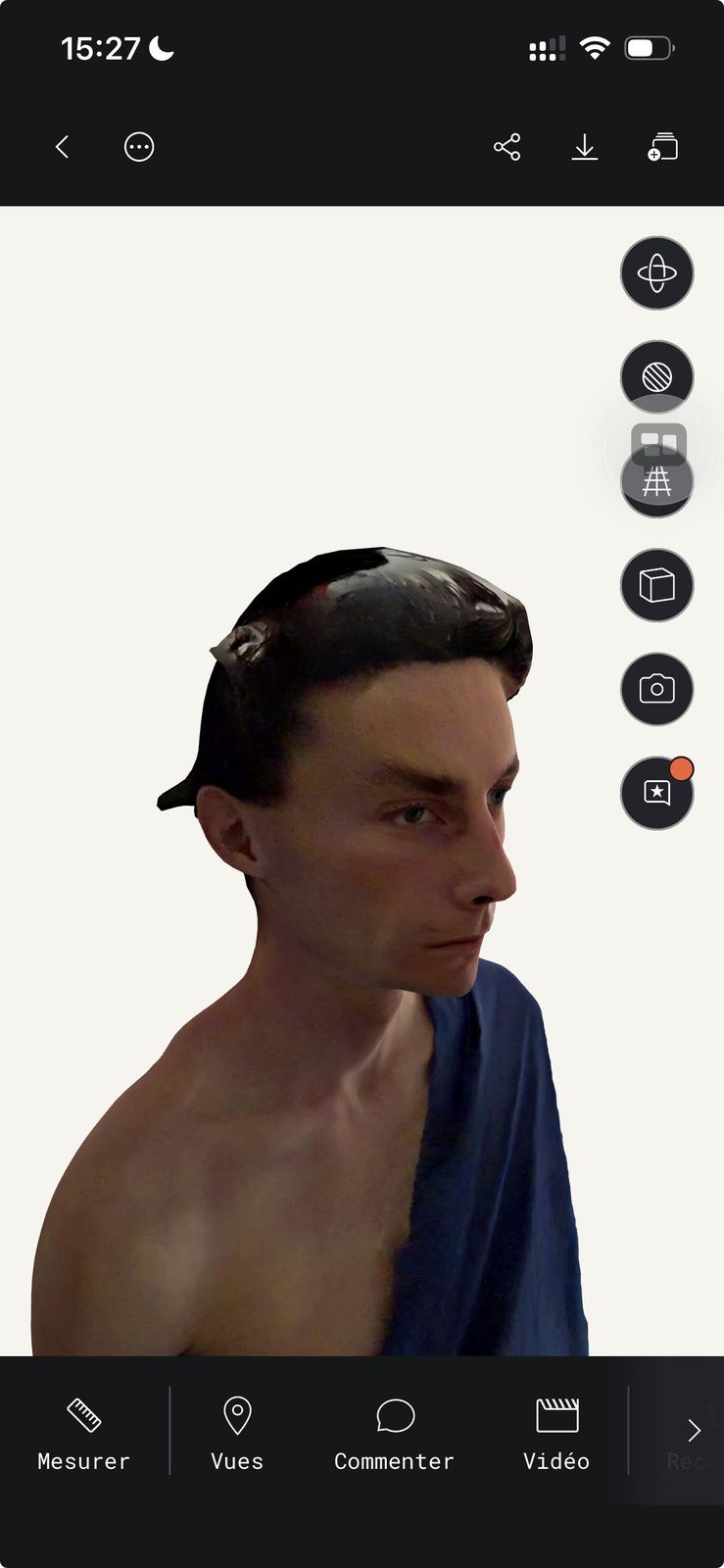
It did not work, for two reasons. I moved during the capture, so the proportions of my head came out wrong. And my roommate never got the camera properly over the top of my head, so the scan has a large hole up there, which the app filled in with a dark blob. Neither problem is fixable afterwards, so the answer was to do it again.
The second scan was done by Mohammed, in the lab, and it is very well executed. The model is good too. The toga stayed at home, so this time I am in a hoodie.
For the body I used this bust of Marcus Aurelius from MakerWorld, downloaded as an STL. Then I opened it in Bambu Studio to put my own head on it.
The operation is exactly as brutal as it sounds. I imported the emperor, selected him, and used the Cut tool to pass a plane through his neck, keeping the body and discarding the head. Then I imported my own scan, also as an STL, and brought it in as a part of the same object so that the two meshes would be treated as one thing and printed together.
Lining the two up was the fiddly part. My neck and the emperor's neck were not the same width, so the join either floated above the shoulders or sank into them. I resized and nudged my head several times before the two actually met, which is the sort of thing that looks like one step in a write-up and takes half an hour in practice.
Even so, the link between the bust and the head is not perfect. I did try to join the two parts properly and smooth them into each other, but if you look closely you can still see where I end and Marcus Aurelius begins.
That first version, done by hand in Bambu Studio, worked, but it looked rough. So I then asked Claude Code to redo the same steps more cleanly with a Python script: straighten the scan, cut out my head and neck, graft it onto the bust and scale the whole thing to 100 mm. The script also added the wreath, described below.
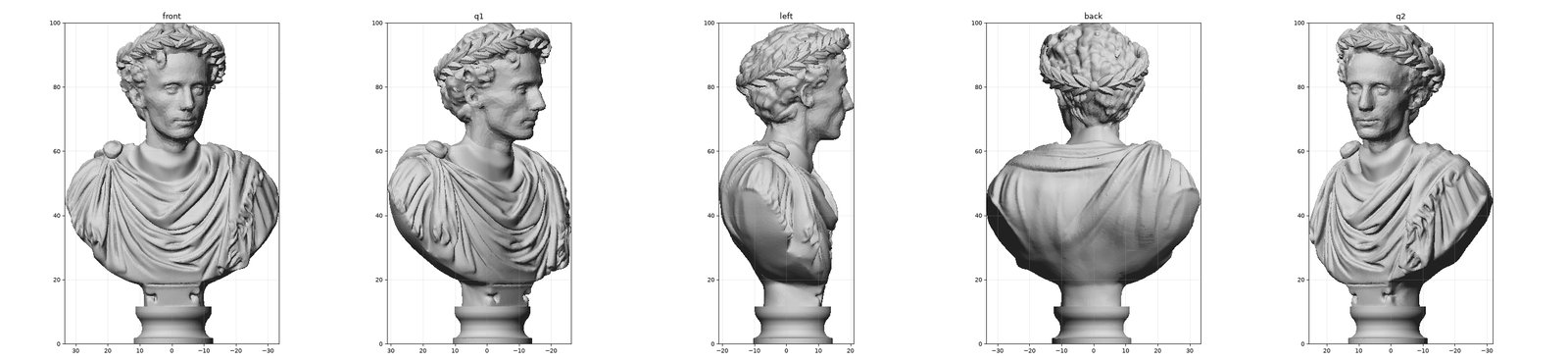
Then I decided this was not grandiose enough for a Roman emperor, so I asked Claude Code to add a laurel wreath on top of my head. It did it very neatly.
Nobody sculpted the wreath by hand. Claude Code wrote a Python script that generates it:
The clever part is that each leaf is sunk into the hair instead of sticking out. Nothing floats in the air, so the wreath was designed to need no supports of its own and no leaf can snap off. The price is that it is flatter than a real wreath. My face is not modified at any step, which I appreciate.
This was the first time I have ever 3D printed anything. I printed the bust on a Bambu Lab printer in the lab, in white, with a 0.4 mm nozzle.
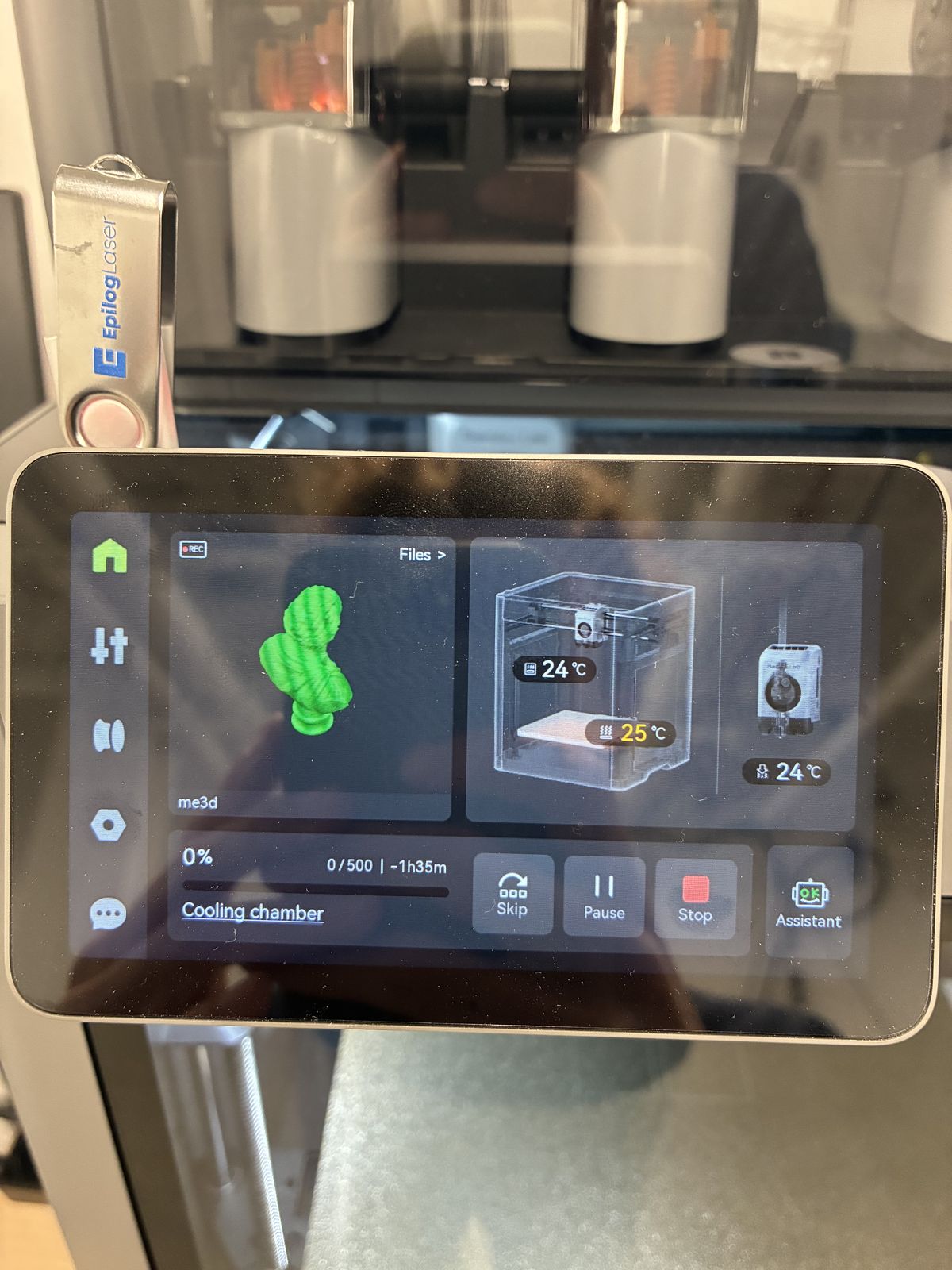
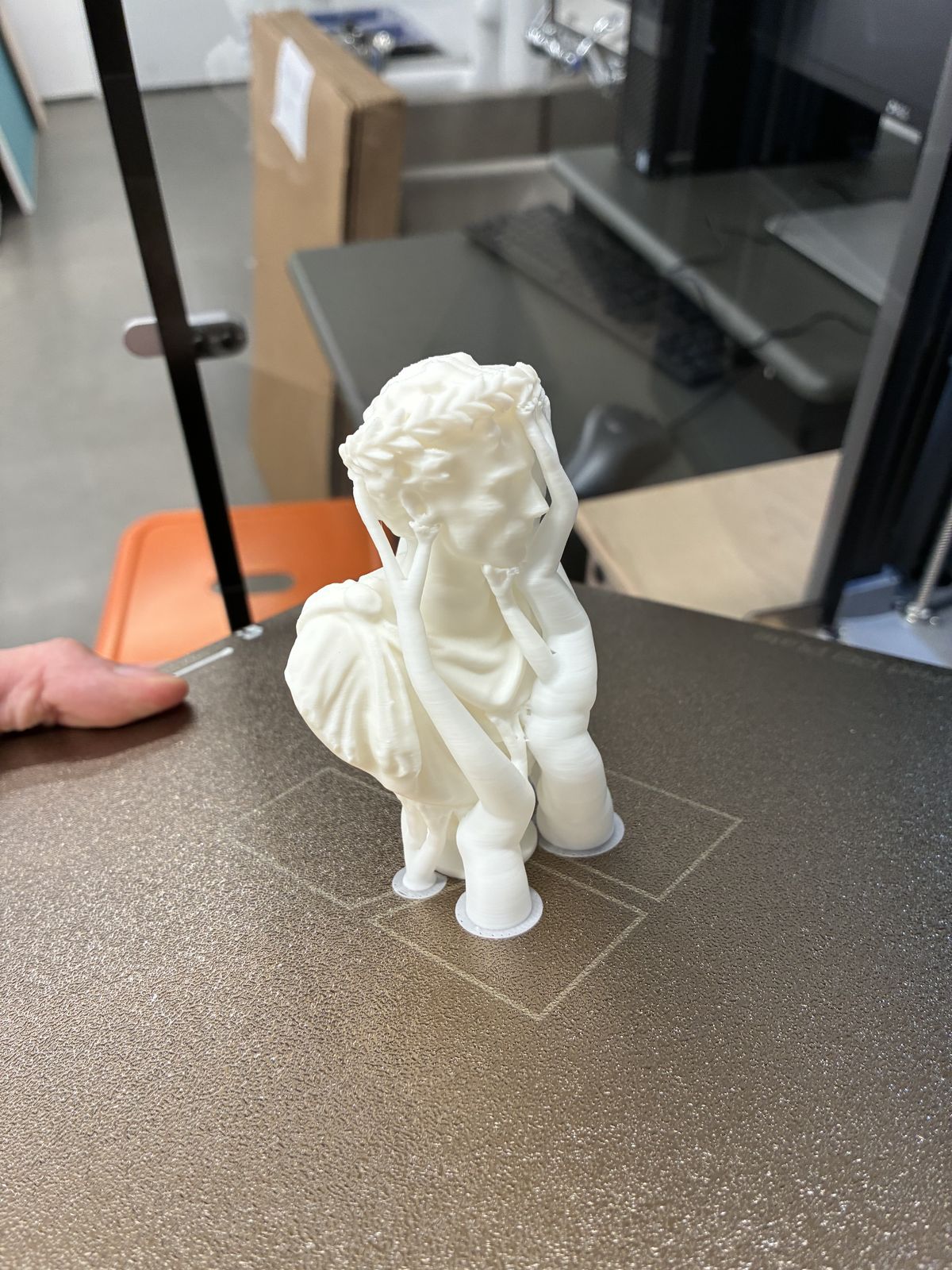
A bust has a lot of parts that stick out horizontally over nothing, my nose for example, and a printer cannot put plastic down on thin air. So in Bambu Studio I added tree supports around the bust: thin branches that grow up from the plate and hold up every overhang while it prints. Once the print is done, you break them off.
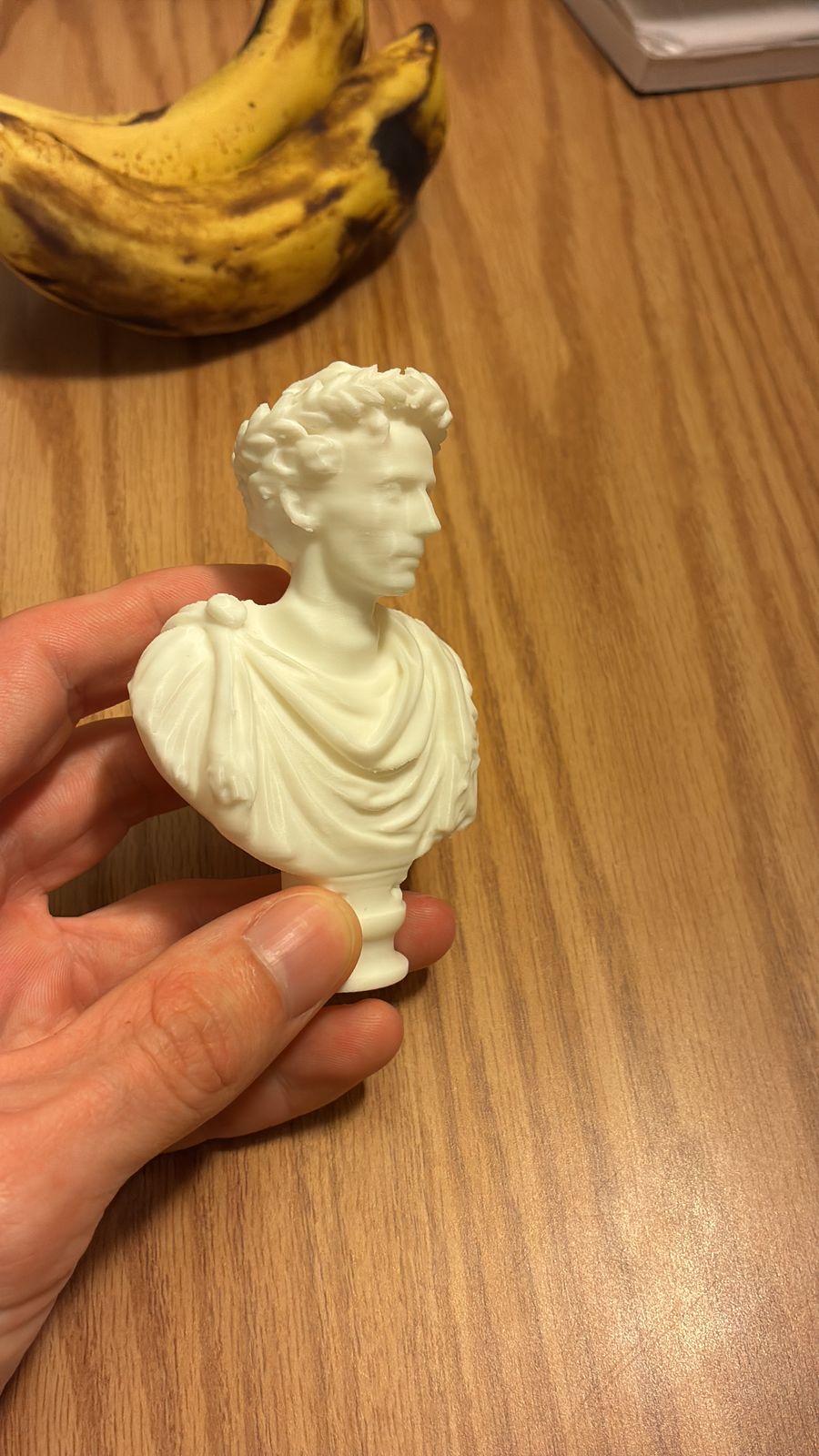
This week taught me a handful of tools I had never touched: a phone scanner, bambu labs, and a printer. The lesson from the first failed scan is that the capture is the part you cannot fix later. If you move, or if nobody covers the top of your head, no work afterwards gets that geometry back.
More importantly, this is where my final project actually starts. I am now thinking of scanning a Tech Dinghy and making a remote-controlled version of it, printing the hull in two pieces and gluing them together. So this week was the beginning of my final project rather than a side quest.
The body of the bust is not mine, I found it on MakerWorld, so I only show the finished bust in the 3D viewer above instead of sharing the file. The 3D models on this page are lighter versions of the originals.