
Fabrication equipment
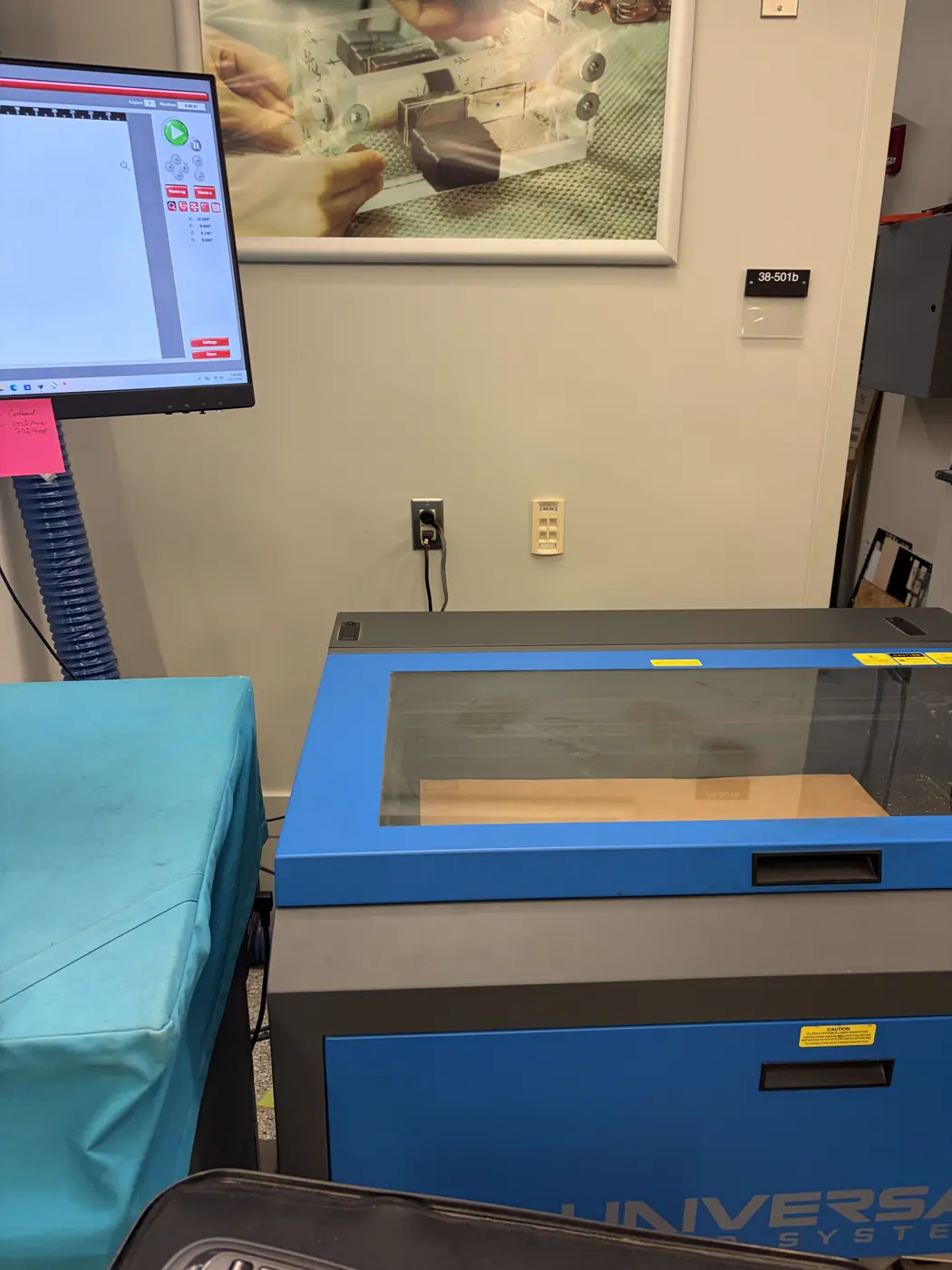
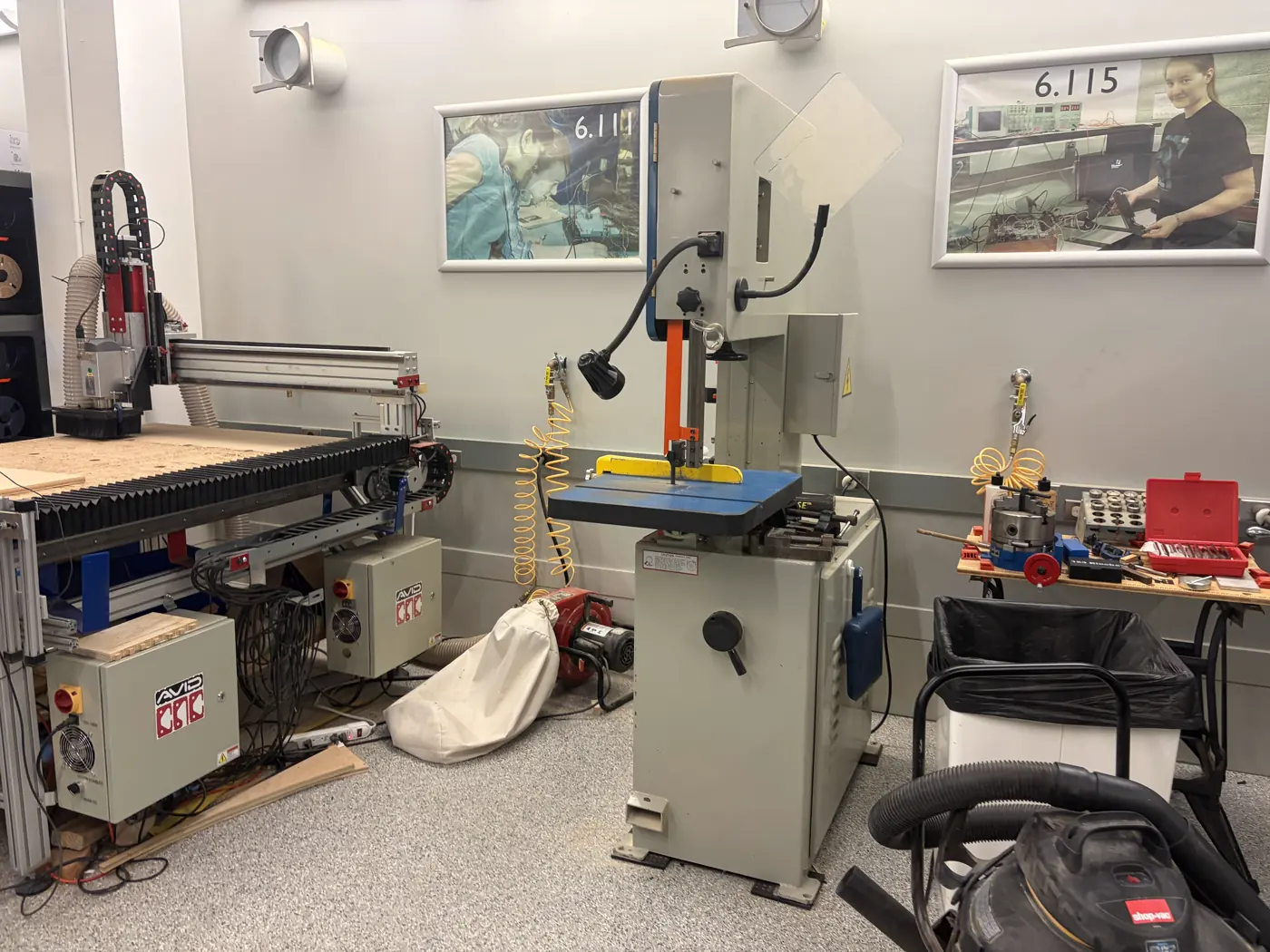
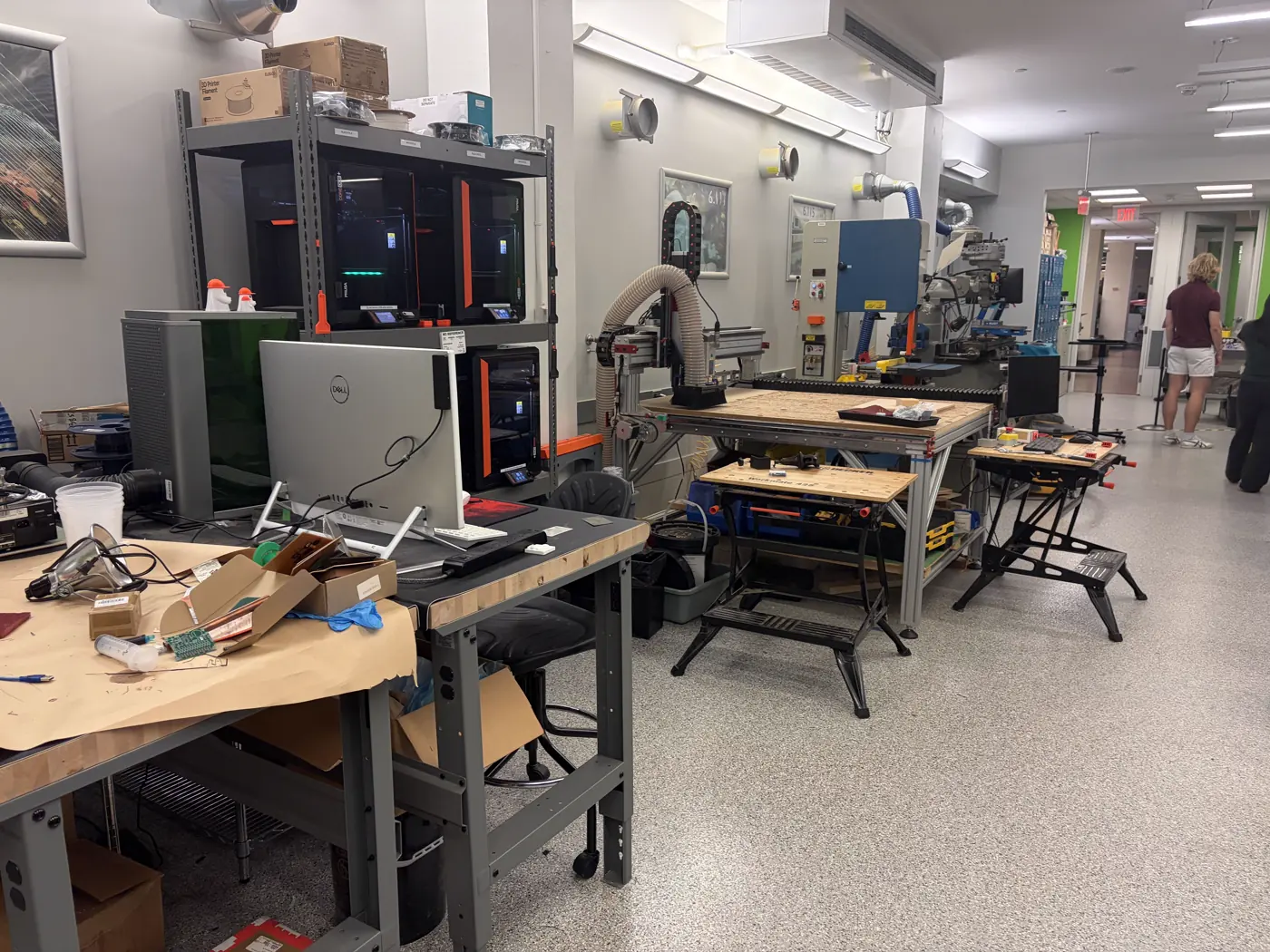
Project management
The signed student agreement was committed to Forge on September 18. The personal site uses plain HTML and CSS. Each week now has its own page so opening the index does not download every process image. The Git tutorial still needs a completion record.
Laser cutting: one tile, four connections
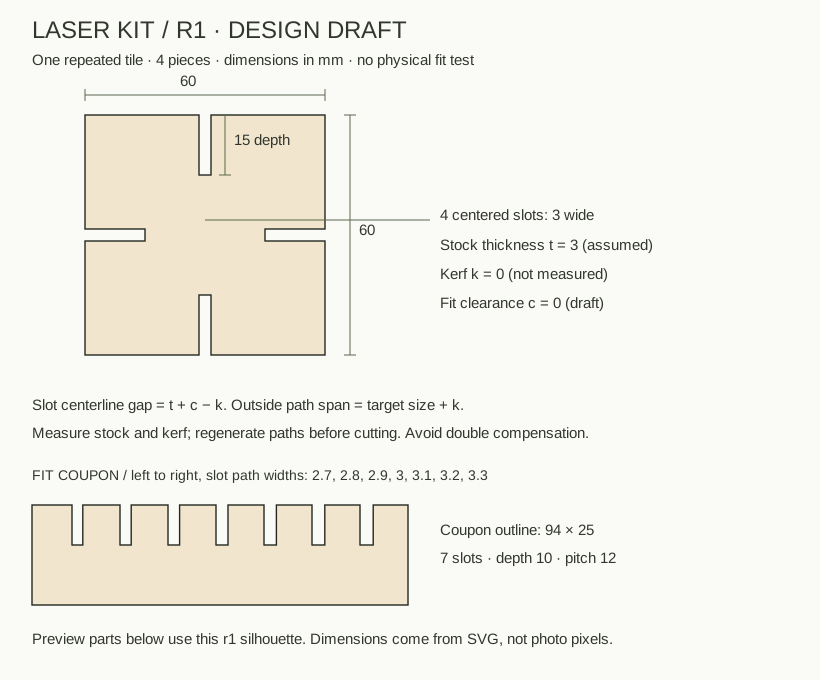
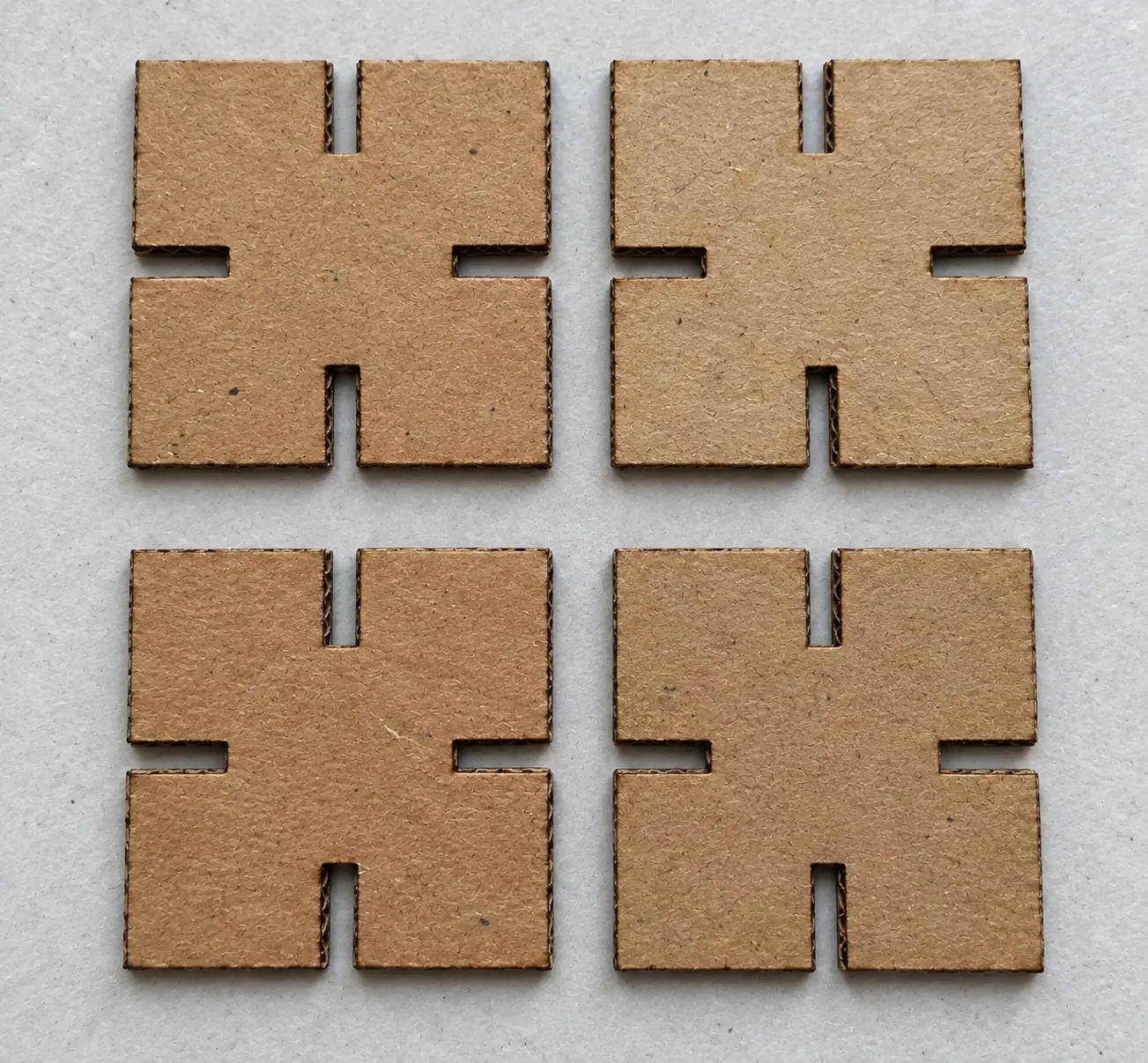
The r1 draft uses four identical square tiles. Each tile is 60 × 60 mm, with one centered 3 mm-wide, 15 mm-deep slot on each edge. The four directions allow the same part to be reused in different arrangements. Assembly and joint strength still need physical testing.
The drawing, cut layout and photographic preview all use this revision. The preview shows the four parts flat so the slot count, location and proportions can be compared directly, without hidden joints.
Parameters and kerf
The editable Python generator exposes side length, stock thickness, slot depth, desired fit clearance and measured kerf. In a centerline cutting workflow, the slot path gap is thickness + clearance − kerf; the outer path span is target side + kerf. Applying a second automatic kerf offset in CAM would double-compensate the geometry.
Before cutting the full kit, measure the stock and kerf and regenerate the paths. The companion 94 × 25 mm coupon has seven 10 mm-deep slots: the current draft widths are 2.7, 2.8, 2.9, 3.0, 3.1, 3.2 and 3.3 mm from left to right. Test the actual stock in those slots and record the fit instead of assuming the nominal 3 mm joint works.
Four-tile SVG layout · Fit coupon SVG · Parametric Python source
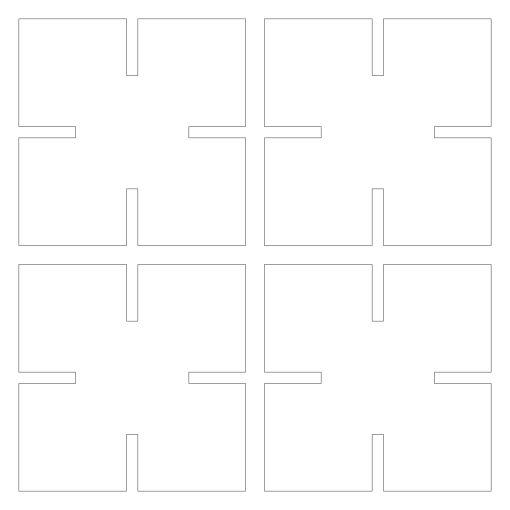
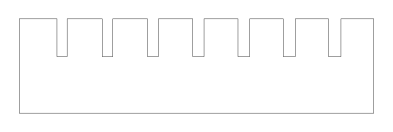
The downloadable cut SVGs contain only closed cutting contours, without labels or dimension lines. Preserve millimetres on import. The displayed dimension sheet is for reference and should not be sent to the cutter.
Vinyl cutting: geometric B
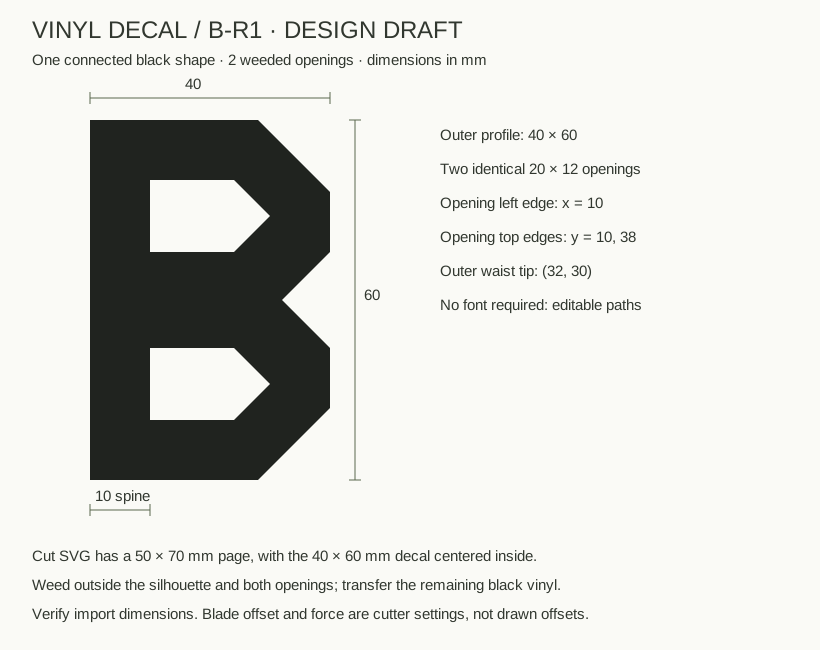
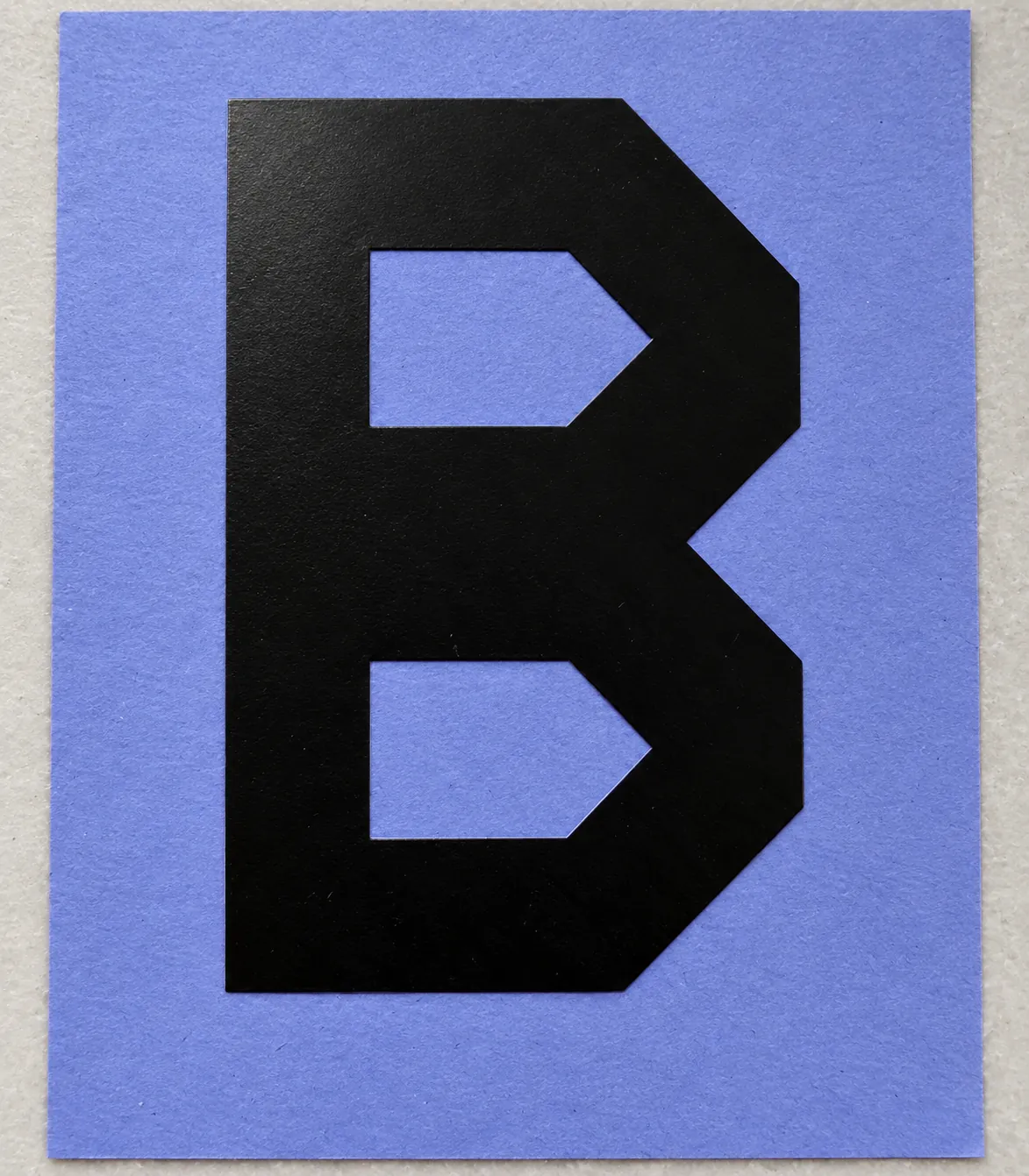
The decal is an editable polygon, rather than a font glyph. Its bounding box is 40 × 60 mm. A 10 mm left spine joins two angular lobes; two identical 20 × 12 mm openings are removed during weeding. Their top edges are at 10 and 38 mm from the top of the letter.
Cut, weed and transfer
The cut SVG uses a 50 × 70 mm page with 5 mm margins around the 40 × 60 mm decal. Check the letter dimensions after import; do not resize it to the entire page. Both internal openings and the external perimeter must be included in the cutter paths.
Start with a small test cut using the actual vinyl and blade. Then cut the decal, remove the surrounding waste and both internal pieces, apply transfer tape, and transfer the retained black shape to the selected surface. Blade offset, force and speed belong to the machine setup and have not been measured here.
Editable B-R1 vinyl SVG · Dimension sheet

The next physical record should include the cut on its liner, weeding, the transfer and the final applied decal. The two openings, angular right-hand waist and continuous left spine provide a direct visual check against the drawing.