Final Project
Nuclear Magnetic Resonance
Nuclear Magnetic Resonance (NMR) is a spectroscopy that probes transitions between nuclear spin states which allows us to determine the structure and dynamics of molecular systems. Spin is a difficult thing to explain, but it is easiest to think about as an intrinsic, quantized angular momentum which imparts a magnetic moment on particles or nuclei. NMR, consequently, detects how these moments behave in a strong magnetic field.
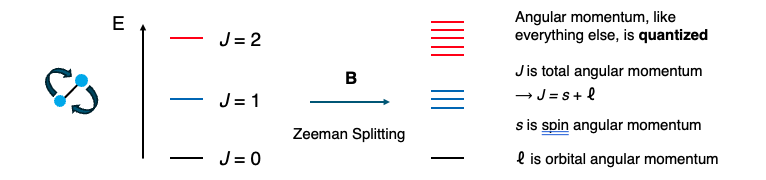
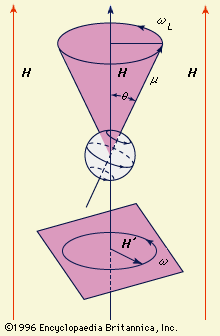
Since nuclear spins have both magnetic and angular momentum properties, this leads to a phenomenon called spin precession. One would expect that, in the presence of a large magnetic field, these nuclear magnetic moments will align with the applied external field to minimize the energy. This does indeed happen, but due to the angular momentum aspect of spin, the spin polarization responds by moving around the field axis in the shape of a cone at a specific frequency. This motion is called Larmor precession, and the frequency at which the spin precesses is called — you guessed it — the Larmor frequency.
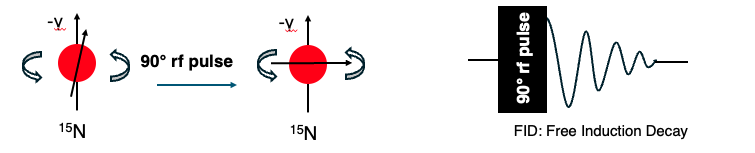
There are a lot of different terms in the NMR Hamiltonian which affect your experiment (both how you perform it and what kind of information you can extract from it). The Zeeman interaction is the basis of the experiment, but things like dipolar couplings, J-couplings, chemical shift anisotropies, and quadrupolar couplings can perturb your energy levels, affecting the frequency at which spins precess in a given part of a molecular assembly. By shooting spins with radio-frequency (RF) pulses, we can perturb the spins away from their equilibrium and measure the frequency at which they precess as they return to it. By taking a Fourier transform of the NMR signal, called the Free Induction Decay (FID), we can plot the measured precession frequencies and connect the spectral features to the structure of the molecule.
An admittedly crazy idea for a solid state 17O NMR probe
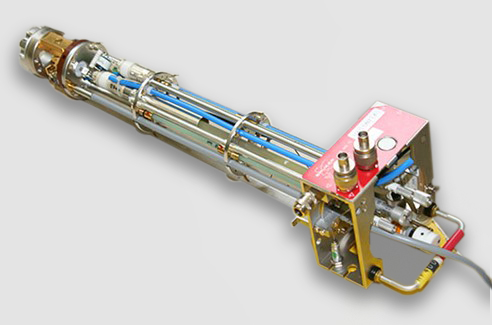
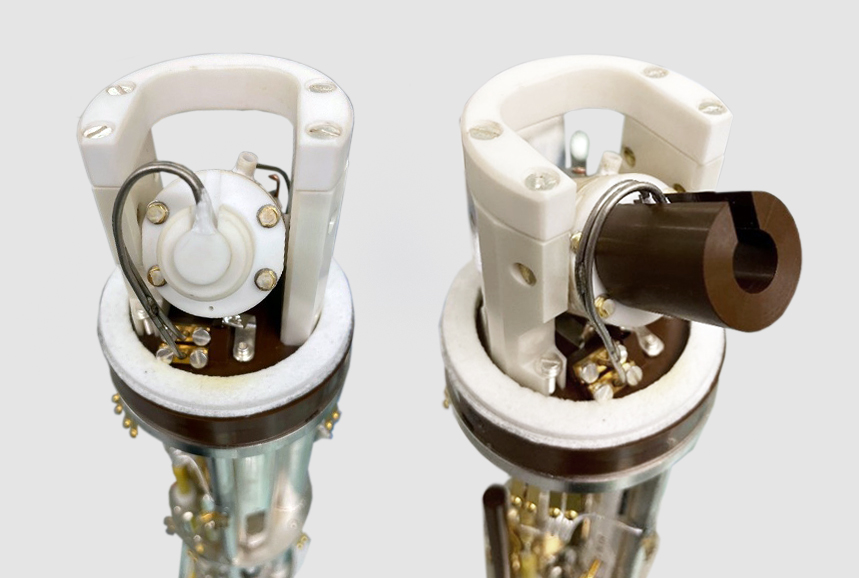
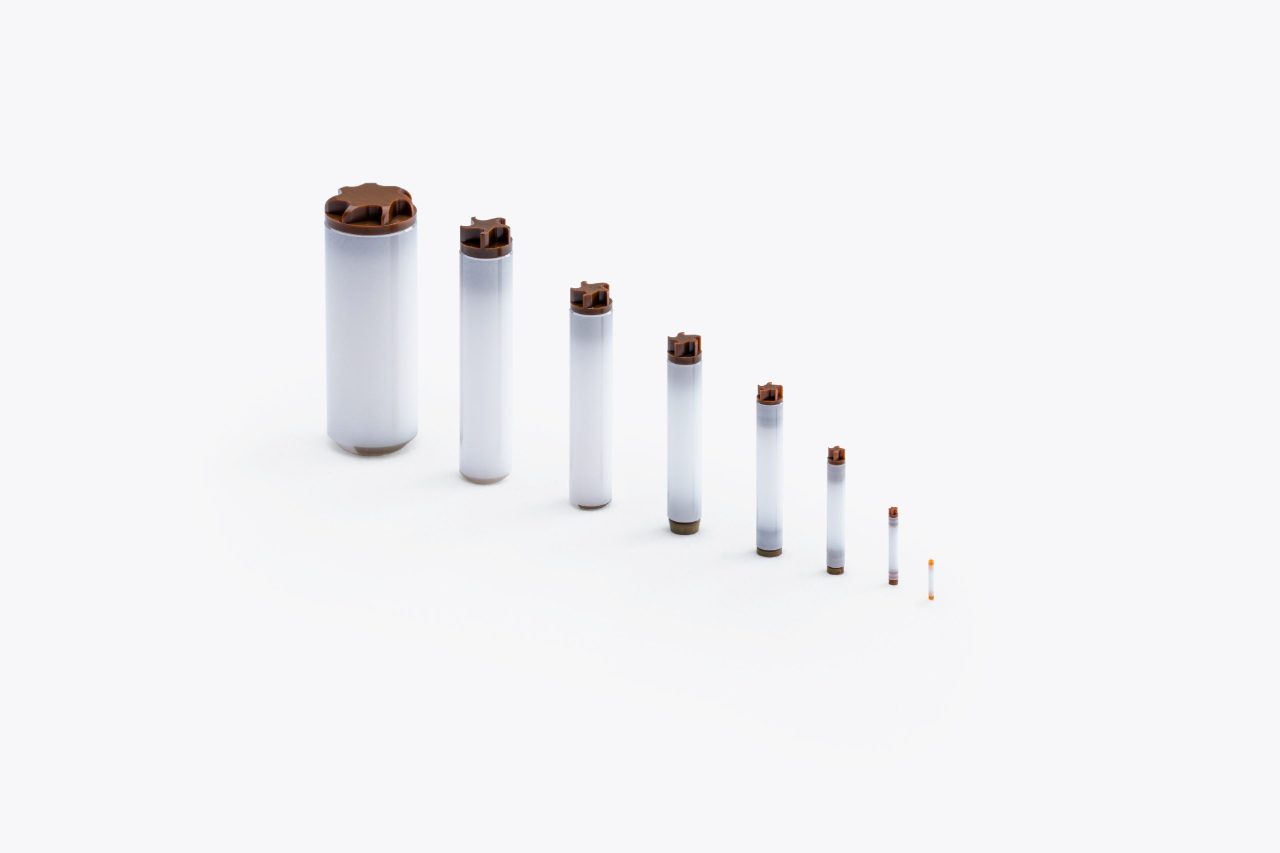
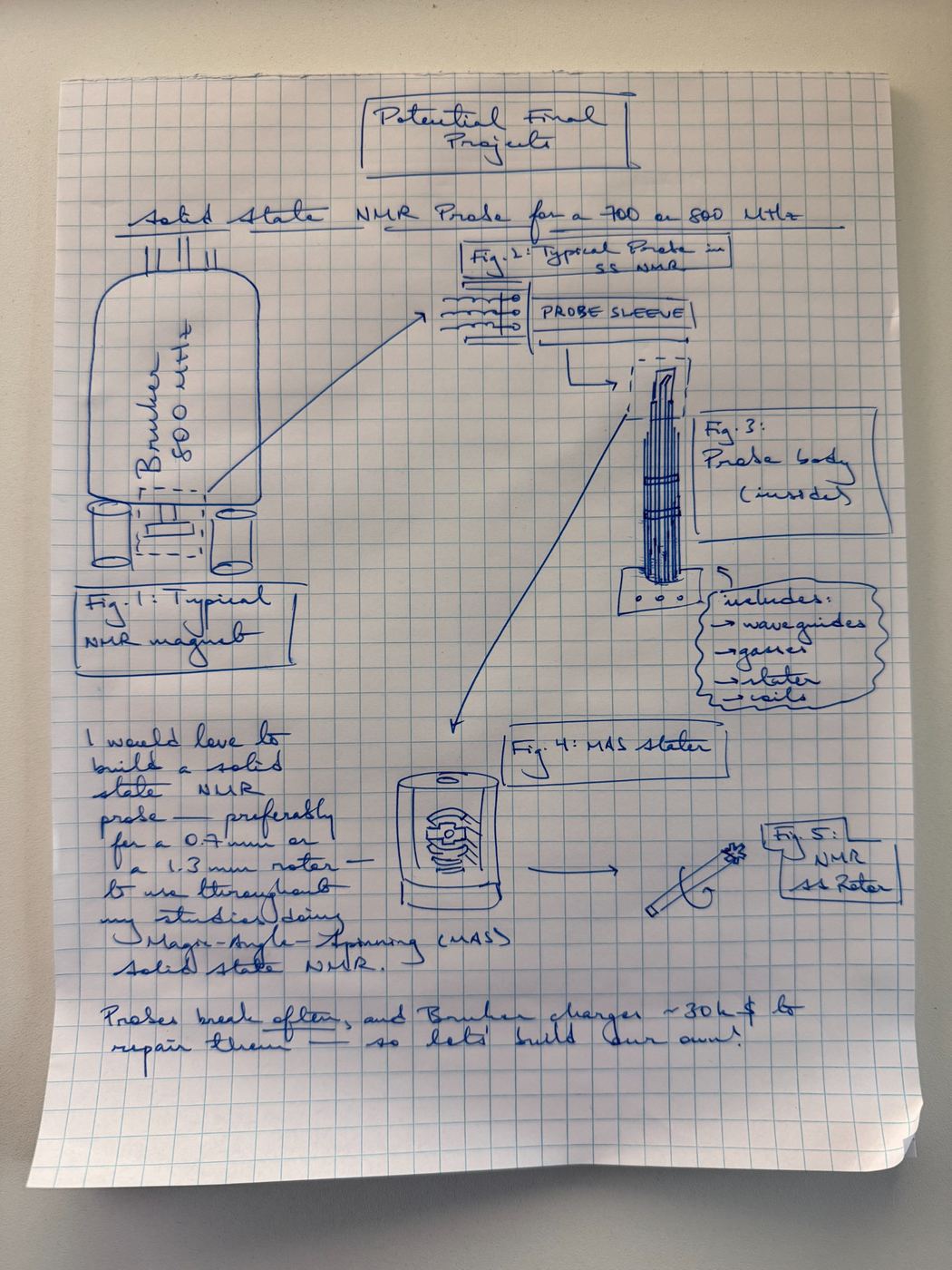
For my final project, I would like to build a solid-state Nuclear Magnetic Resonance (NMR) probe that functions for 17O NMR (i.e., that can be tuned to that channel), as this is what I will dedicate my graduate studies to. In a typical solid state NMR experiment, a probe is the apparatus where you load and spin your sample under Magic Angle Spinning (MAS). Typically, a powder is packed into a rotor (which can be of various sizes, and therefore spin at different frequencies), and the rotor is loaded into the stater, which is the top component of the probe itself. The probe is what connects your experiment to everything. Though the magnets themselves are typically larger than cars, the probe is how the user "communicates" with the experiment. All electrical signals, pulses, and measurements go from your user interface through the probe and back. A typical probe, then, executes an insane amount of functions. It requires waveguides that run through the entirety of its length, for instance, so that pulses can reach the sample and consequently affect the polarization of your spins. A probe measures this polarization by incorporating a coil around the stater which can detect small changes in magnetization to obtain a Free Induction Decay (FID) signal. Most astonishingly (in my opinion), a probe has gas channels responsible for creating an air cushion so the rotor can "levitate" (reducing friction) and spin up to 150 kHz (9 MILLION rpm). I realize I may be crazy for thinking of this — I predict I will fail spectacularly at actually building a functional probe due to the sheer complexity of the functions it is meant to accomplish. However, fortune favors the bold, and I do not see a convincing enough reason as to why I should not at least try to pull this off. Let's hope this works! Keep me in your prayers.
Dialing it back
Speaking with my advisor and with Neil, I am not entirely convinced anymore that building a probe is the way to go for my final project in this class. For starters, building a good probe is more of a PhD project, not a class project. Simply building a probe with one channel that tunes to oxygen would be straightforward enough to do, but I do not know how intellectually rewarding that might be. The way to think about a probe is that for every channel you add, the imaginary matrix which represents the "build complexity" increases proportionally. I could build a single-channel probe, but that would really just kind of be a tuning and matching circuit (i.e., a 1x1 matrix). If I add more channels, however, it's not just about tuning and matching each one, but about minimizing the interferences between one channel and the others (a 2x2 or a 3x3).
As of right now, I believe I will still do something NMR related for my final project, but it might look different to my original idea. I might still build a single-channel probe with a stater that functions and spins rotors. However, I might also construct a benchtop NMR spectrometer. Instead of just one aspect of the NMR experiment, I could try to build the whole experiment from scratch. It is certainly possible to perform magnetic resonance measurements simply with the Earth's magnetic field. However, I think it would be more fun to make a coil myself and apply a specified field that I would have to construct. Broadly, this project would require me to be generate a field, pulse the samples with radio frequencies to perturb the spin, measure the change in magnetization with a different, transverse coil, and record the free induction decay, perhaps displaying it on an oscilloscope. If I'm feeling really crazy, I might try to actually do the Fourier transform and generate a more "standard" NMR spectrum. The point is: I have a good idea of what it is I'm doing, I've just had to modify my plans to not be overly ambitious. Neil certainly seemed to like this idea of a benchtop NMR experiment, so I will continue exploring this as a final project.